Do Electric Cars Have Transmissions? The Simple Truth About EVs and Gearboxes
Every time I walk onto the lot of a new electric vehicle, the first thing I do is run my ears toward the humming of the motor, listen for the subtle vibration that tells me the powertrain is alive, and then trace my fingers along the polished gearshift cover—if there even is one. The question that keeps popping up from new‑car enthusiasts and seasoned mechanics alike is, “Do electric cars have transmissions?”
In my 20‑plus years at the shop, I’ve handled gas‑powered beasts with 4‑, 6‑, and even 7‑speed transmissions, yet the EVs I work on often come with a single ratio that seems to defy the long‑standing notion of a “gearbox.” Let me unravel the answer.
Different Drivetrains, Different Minds
My first instinct when an engineer asks why EVs don’t need classic transmissions is to draw the picture of two separate worlds. The internal combustion engine (ICE) runs best at a narrow speed band, so it relies on a multi‑speed gearbox to keep it burning efficiently across highway cruising and city stop‑and‑go. The electric motor, on the other hand, delivers maximum torque from zero to a full range of speeds—think of the sudden, punchy surge you feel when you hit the accelerator on a sports car, only now it happens for the first mile and sticks with you forever. The lack of a compression cycle means the motor’s power curve is flatter; it doesn’t need multiple gears to stay within its sweet spot.
Imagine stepping into a showroom and hearing a quiet whirring sound instead of the roar or the clatter of gears. The air is thick with that faint ozone of ionized air, and the subtle metallic scent of battery coolant clings to the air. There’s no muffled groan of gears turning. That smell is one indicator that your EV isn’t grinding out several speed ratios, but instead relying on the consistent torque of its electric unit.
The Single-Speed Gearbox (A Modern Minimalist Dream)
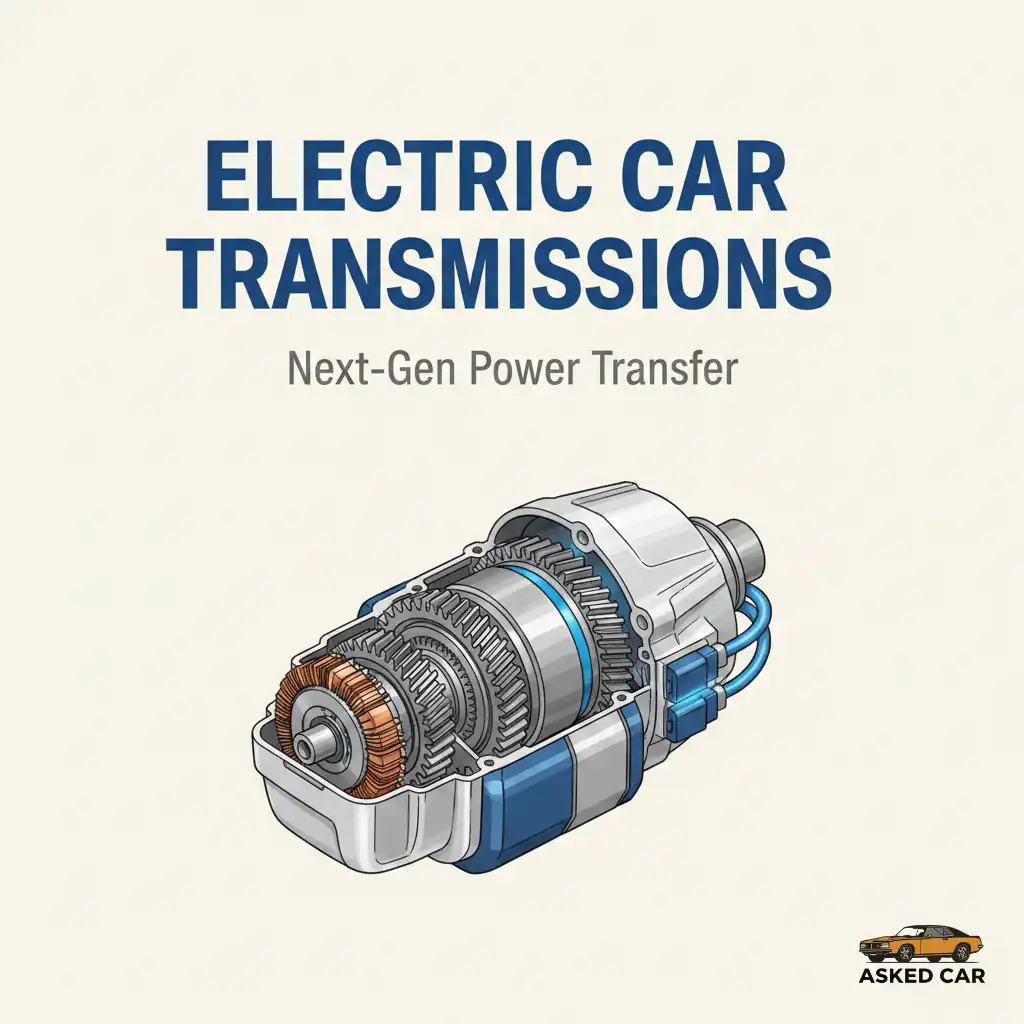
I have worked in workshops with all sorts of gearboxes, but the one that came to the fore in electric cars is the single‑speed reduction gear—a tiny, purpose‑built unit that sits between the motor and the wheels. It’s smaller, lighter, and quieter. The motor’s output shaft, which is effectively a direct-acting rotor, turns through a reduction gear of maybe 4:1 or 5:1 before it pushes the wheels. That reduction ratio ensures that, even if the motor runs at roughly 6,000–8,000 RPM in regular driving conditions, the wheels spin at an efficient speed for both acceleration and cruising.
The reduction gear is typically a planetary gearbox design, which offers very compact packaging and high power density. It’s a simple, robust solution—it has fewer moving parts compared to a traditional 5‑ or 6‑speed unit, and fewer parts mean fewer things that could go wrong. The humming I hear from a fully charged Chevy Bolt or a Porsche Taycan feels different: there’s no chattering as gears shift; instead, a consistent low‑frequency vibration reverberates like a well-tuned drum in a symphony.
Torque, Ratio, and the Lack of Trans in EVs
During my early school days in automobile mechanics, we drilled the old mantra: “Torque is what moves the vehicle.” An ICE must use a transmission because its torque varies drastically over RPM. An electric motor delivers a maximum torque peak right at the start. That peak, when combined with a fixed gear ratio, allows an EV to accelerate quickly and maintain efficient use of its battery’s power. The ratio is chosen to strike a balance; too low and the motor will struggle to keep up at highway speeds, too high and it will spin the motor too fast and waste energy.
In an average EV, torque curves look something like a bell-shaped curve that flattens beyond 30-40 miles per hour. That curve eliminates the need for a multi‑speed system. If a car were to shift through gears, it would not increase efficiency but would add mechanical losses and complexity. My hands have felt a torque converter’s sliding friction when diagnosing a stuck power steering on a manual Prius, and I can tell you that the smooth, almost syrup-like torque delivery of an electric motor is something else entirely.
A Gallery of Transmissionless EVs
The modern electric vehicle lineup is littered with examples that confirm the theory: a Tesla Model 3, a Nissan Leaf, a Chevrolet Bolt, a Hyundai Kona Electric, or a more exotic plug‑in hybrid like the Porsche Taycan all carry no more than a single reduction gearbox. In each case, the motor’s power band comfortably covers the entire range of driving speeds, from a snail‑slow crawl in traffic to a smooth, highway cruise at 80 mph.
When a shop like mine receives an EV for service, I rarely get to touch a gear-shifting lever because it simply doesn’t exist. Instead, I get to inspect a motor’s housing, the battery pack’s coolant system, and the electrical relays that control the motor controller. That’s what I call real‑world testing. The sounds—slight clicks when engaging a regenerative braking cycle, the hiss of coolant flowing—tell a richer story than a click‑thunk of a gear change ever could.
Where Transmissions Make an Appearance? (High‑Performance and Hybrid Cases)
While most production EVs steer clear of a multi‑speed gearbox, some niche models bring it back. In 2012, the electric car made a return to the sports‑car arena when the McLaren P1 and the Ferrari LaFerrari utilized a 1‑speed gearbox to bridge the powerful electric motor with a 12‑speed manual ICE system. Those hybrid powertrains blended the two worlds, but note that the electric portion itself still used a single gearbox.
There are also cases where a “transmission” appears to exist in a regenerative braking system. The motor’s controllers do not rely on a mechanical gear shift but on electronically varying the voltage and current to produce reverse torque. If you close the wheel‑speed sensor, you’ll hear a faint whir as the regenerative system kicks in. This electrical analogue is the closest thing to a “gear change” in an EV, a mechanical component that can slip.
Additionally, a few early EV prototypes, such as Roush’s 2004 “Electric Grand Prix” and the Sovro 2004 hybrid bus, featured a simple planetary gearbox that acted as a final drive, but this was more about structural compatibility with existing chassis than a necessity of high performance.
Turning Speed into Energy, Not Gear (Regenerative Braking)
The regenerative braking system is a highlight when talking about EV gear differences. In a conventional car, braking translates kinetic energy into heat via brake pads. In an EV, the motor reverses its role when we modulate its electrical parameters, turning the kinetic energy back into usable power. There’s no mechanical gear shift here either—once the throttle lever a set of high‑frequency pulses and the controller kicks in, the car slows while the battery gains charge. The sound is a low‑pitched, almost imperceptible hum that becomes pronounced as the controller modulates power in real time.
I’ve watched, in a handful of service visits, a battery pack slowly swell as it recharges through regenerative braking. For the mechanics, noticing the change in current and voltage is the key to diagnosing performance issues. That moment is more satisfying than hearing a clunk of gears changing. It confirms the EV’s core promise: efficiency.
My Experience in the Garage
I remember one hot summer afternoon when a customer brought in a Chevy Bolt, complaining that the car “was not feeling as smooth.” The motor’s power output was marginal, and the battery temperature was higher than normal. Upon inspection, I discovered that an internal fault in the motor controller was limiting how much electric torque was sent to the wheels.
The reduction gearbox had zero issues; its only job was to bring down the high 8k RPM to roughly 3000 RPM, driving the wheels. Because the motor wasn’t providing enough torque, the car behaved as if it had a sluggish transmission. Fixing the controller restored the smoothness. No gears had to shift; the solution was in the electric control software.
It’s an example of a “transmission problem” that’s actually an electronic one. My hands on the wheel of a Tesla Model S felt the difference: the gearshift lever was dead‑stop, but moving the pedal would cause a deep, resonant vibration that seemed to echo through the cabin, letting me know that power was being delivered.
Variable-Speed Drives and the Future of EV Transmissions
Even though current mainstream EVs use simple reduction gearboxes, engineers are experimenting with variable‑speed drives that might eventually replace the fixed ratio. Think of a motor with an electronically changeable gear ratio that can adjust to extremely high speeds or high torque demands for certain applications—including in heavy‑duty trucks and industrial vehicles. This would combine the benefits of an EV’s high torque and the fine control of a gear system.
But the reality is, the motor’s power curve and a moderate reduction ratio are currently adequate. The engineering focus will likely stay on improving battery chemistry, thermal management, and software control rather than redesigning the gearbox again.
The Bottom Line: EVs Simplify, They Don’t Eliminate Powertrain Engineering
I’ve watched a generation of engines go from a 4‑speed to a 6‑speed, and now the new generation of EVs is built on a single, robust reduction gearbox that simplifies everything. The absence of a multi‑speed transmission in an electric car does not mean a lack of complexity—it simply means the complexity is shifted to the motor controller, battery pack, and software that manages them. In a shop, I hear that there’s a little hum of a gearbox, but a steady buzz from the ECU, the faint fizz of a resistor heating up, the sweet metallic odor of a clean motor.
If you still think we’re missing an essential component, you’re probably looking at the problem from the wrong perspective. Because electric vehicles offer efficient, near‑constant torque, the need for a gearbox is largely eliminated. Nevertheless, to ensure optimal performance, we still need a final drive gear—just one that delivers the right ratio from motor to wheels and remains silent like a whisper in comparison to the loud clatters of a high‑speed garage.
In summary, yes, electric cars do have a transmission—no, they don’t have a multi‑speed automatic or manual one. They rely on a single‑speed planetary reduction gear to translate the relentless torque of the motor to the wheels, and that is, quite literally, the whole story behind the silence in the driver’s cabin.