How to Get Cigarette Smell Out of Car? 4 Proven Ways to Get Cigarette Smell Out of Car Fast & Forever
The smell of stale cigarette smoke is, chemically speaking, one of the most stubborn contaminants you will ever fight in a vehicle. It isn’t just a “smell” floating in the air; it is a physical layer of resinous tar and nicotine that bonds to every surface, from the urethane foam in your seats to the plastic of your dashboard. In my shop, I call it “The Ghost,” because you think you’ve killed it, but the moment the car sits in the hot sun for an hour, it comes roaring back.
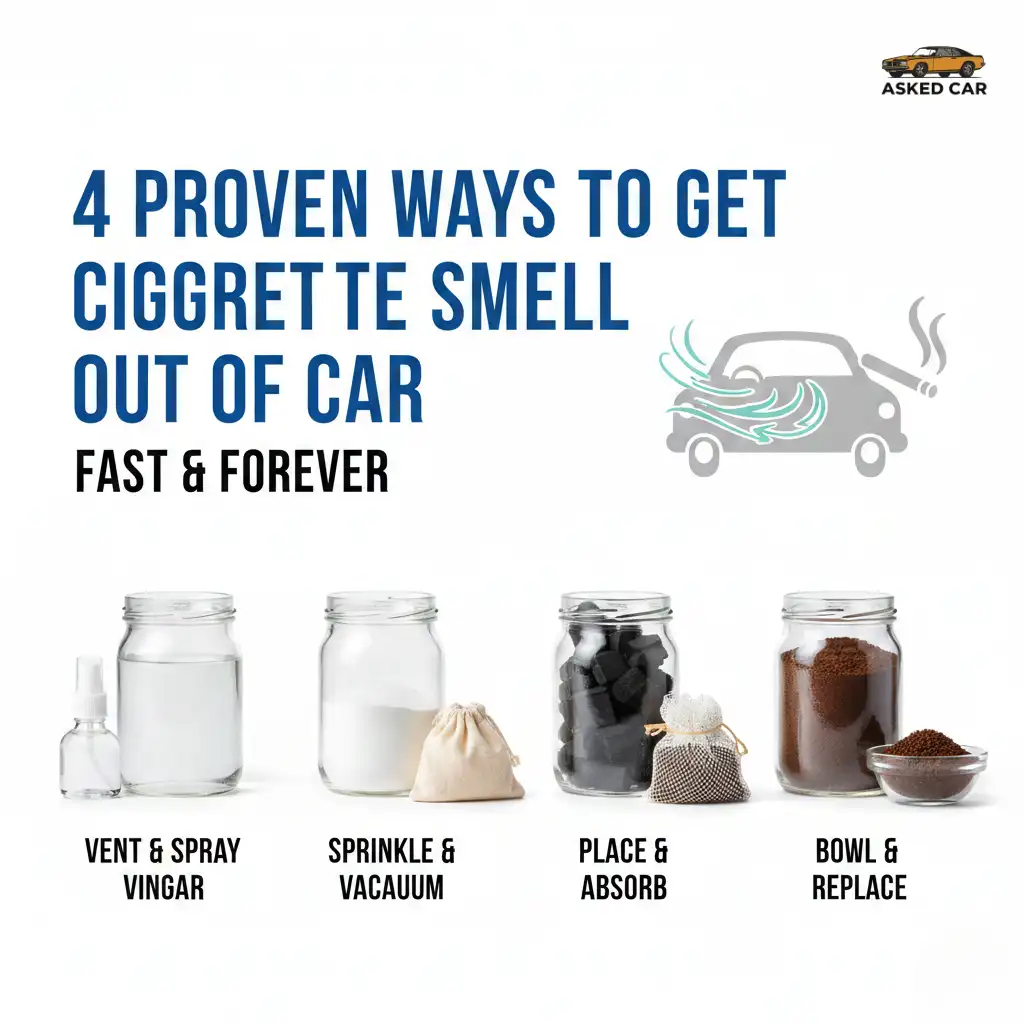
If you are trying to sell a smoker’s car or you just bought one, you need to understand that a $5 air freshener tree is like putting a Band-Aid on a bullet wound. To permanently remove the odor, we have to attack the chemistry of third-hand smoke. This isn’t a quick spray-and-pray job. It is a surgery. Here is how a professional mechanic and detailer tackles the job, step by step.
Way 1: The Purge (Do Not Skip This)
Before you buy a single cleaning product, you must physically remove the source. Smoke particles are heavy. They eventually settle, and gravity pulls them down into the deepest crevices of the interior.
Start by removing everything that isn’t bolted down. Floor mats, seat covers, trash, and even the owner’s manual from the glovebox need to come out. Smoke residue loves paper. Next, grab your shop vac and an air compressor. You need to blow out the “forgotten zones”: the tracks under the front seats, the gap between the center console and the driver’s seat, and the seams of the upholstery. I’ve found cigarette butts from 1998 jammed into seat rails that were still off-gassing odor. If you don’t physically remove the ash and tar-coated dust, no amount of chemical treatment will work.
Way 2: The Chemical Strip
Smoke residue is acidic and sticky. To break the bond it has with your interior panels, you need an enzyme-based cleaner or a dedicated degreaser. Simple soap and water usually just smear the tar around.
The Headliner Hazard: This is the most critical warning I will give you: Be incredibly gentle with the headliner. The fabric on your ceiling is held up by a fragile layer of foam and glue. If you soak it with cleaner or scrub it hard, the glue will dissolve, and the fabric will sag like a tent. I use a microfiber towel lightly misted with a fabric-safe enzyme cleaner and gently “dab” the surface. If the towel comes away yellow, you are pulling out tar. Keep flipping the towel until it comes away clean.
The Hard Surfaces: You must wipe down every square inch of plastic, vinyl, and glass. Smoke creates a yellow, oily film that is especially visible on the inside of the windshield. A 50/50 mix of white vinegar and water is surprisingly effective here because the acetic acid cuts through the nicotine resin better than many expensive interior detailers. Don’t forget the seatbelts—pull them all the way out and wipe them down. They are a huge, often ignored, surface area for smell.
Way 3: The Ventilation System Surgery
If you turn on the AC and get a blast of ashtray smell, the smoke is living inside your HVAC box. This is where most DIYers fail.
First, replace the cabin air filter. It is usually located behind the glovebox. I’ve pulled filters out that were so brown with tar they looked like they had been dipped in coffee. Throw it away.
Next, you need to treat the evaporator core and ducting. Locate the fresh air intake vents on the outside of the car. On most vehicles, like a Honda Civic, Toyota Camry, or Ford F-150, these are the black plastic grilles right at the base of the windshield where the wipers sit.
- Turn the car on, fan to Max, AC off, and set to “Fresh Air” (not Recirculate).
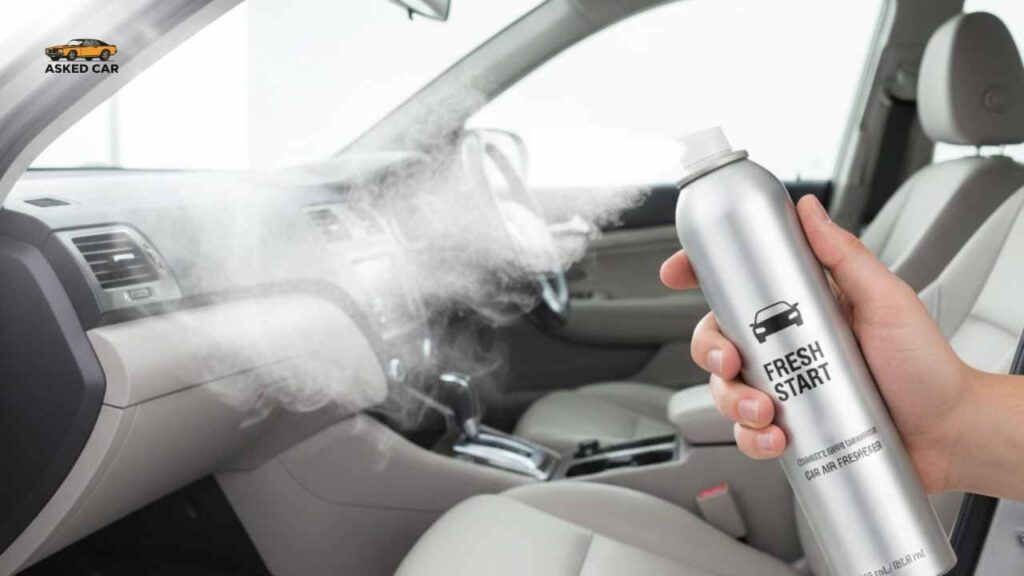
- Spray a dedicated HVAC duct cleaner or an enzyme odor neutralizer directly into those exterior intake vents.
- The fan will pull the mist through the system, coating the ductwork and the evaporator core, neutralizing the tar hidden deep inside the dash.
Way 4: The Nuclear Option (Ozone Treatment)
If you have cleaned everything and the smell persists, you need an ozone generator. This machine creates O3 (ozone) gas, which is unstable and aggressively attaches to odor molecules, oxidizing and destroying them.
Safety Warning: Ozone is dangerous. It damages lung tissue and can degrade rubber and electronics if used incorrectly.
- Park the car outside or in a well-ventilated area.
- Set the ozone generator inside the car and run the power cord through a cracked window. Seal the gap with tape.
- Run the machine for 30 to 60 minutes. Do not exceed this. I’ve seen people run them for 4 hours and destroy the weather stripping and turn their touchscreen displays yellow.
- Crucial: After the timer stops, open all doors and let the car air out for at least an hour before you even think about getting in. The smell of ozone (like a thunderstorm) will linger for a few days, but the smoke smell should be gone.
When is it totaled? (The Mechanic’s Verdict)
Sometimes, a car is too far gone. If the previous owner smoked with the windows up for a decade, the foam inside the seats has essentially become a sponge of tar. In these cases, ozone will only work for a few weeks before the smell leaks out again from the core of the seat.
If you have done the full deep clean and ozone treatment twice and the smell returns, you are looking at replacing the carpet, the headliner, and possibly the seats. At that point, unless it’s a rare classic, the car is effectively “mechanically totaled” by smell. For 90% of cars, though, the four-step process above will get you back to neutral.
Why Ventilation Keeps the Ghost Away
Finally, airflow is your secret weapon. Park the car in the sun during cleaning. Heat accelerates oxidation, so the smells won’t linger. Crack windows daily if possible, and use a portable fan to circulate air. I’ve seen clients come back months later, swearing the odor’s back, only to realize they parked under a shady tree or forgot to ventilate overnight.
This isn’t rocket science, but it’s not witchcraft, either. Smoke odor is a living thing. It migrates, mutates, and waits for a chance to return. With the right tools—baking soda, charcoal, aggressive scrubbing—and patience, you’ll silence that ghost for good. And if all else fails, remember: The best carpets, plastics, and leathers still carry memories. Sometimes, the only way to clean them is to burn the evidence. Just kidding… mostly.