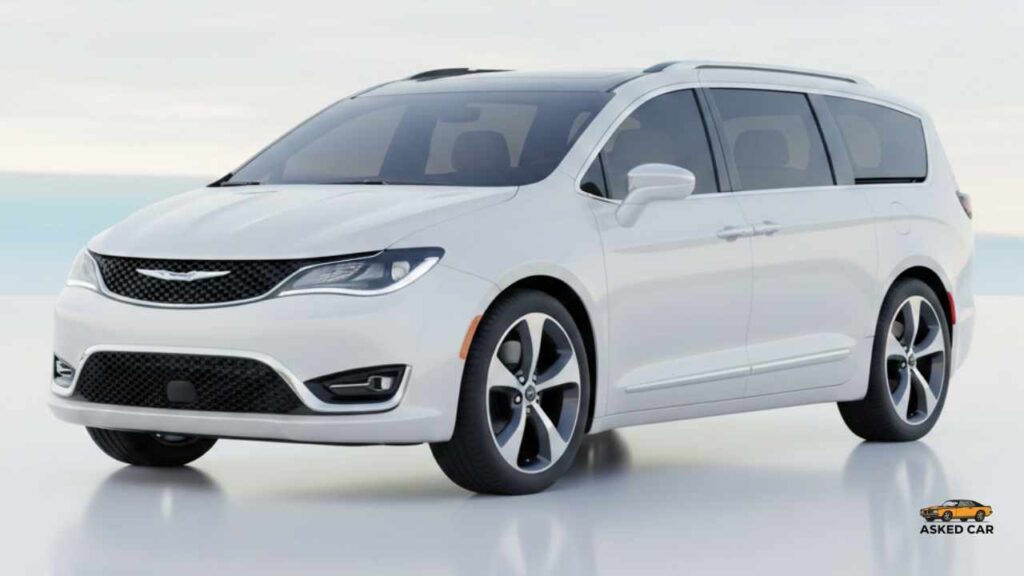
2026 Nissan Ariya Nismo Review: A Performance‑Driven Electric Crossover
The Nismo badge is legendary. It gave us the Skyline GT-R, the 370Z Nismo, and… the Juke Nismo. Now, it has been slapped onto a 4,800-pound electric crossover. The 2026 Nissan Ariya Nismo was supposed to be Nissan’s answer to the Hyundai Ioniq 5 N and the Kia EV6 GT. But for my American readers, there is a catch: You probably can’t buy it.
Reports indicate Nissan has paused Ariya imports to the U.S. for 2026 due to tariffs and shifting strategies, though our lucky neighbors in Canada and friends across the Atlantic still get access. After driving this thing, I have to be brutally honest: while the unavailability stings, we aren’t missing out on the next GT-R. We are missing out on a slightly faster, stiffer, and red-trimmed version of a decent commuter car. Let’s dig into what this “performance” EV actually offers—and what it fails to deliver.
Key Features & Specs
The Ariya Nismo takes the standard e-4ORCE all-wheel-drive platform and turns up the voltage. It sits on 20-inch Enkei wheels wrapped in sticky Michelin Pilot Sport EV tires, which are arguably the single best upgrade on the entire car. Visually, it screams “boy racer” with a unique body kit, red pinstriping that wraps around the entire lower splitter, and a massive ducktail spoiler on the rear hatch.
Under the metal, you get the larger 87 kWh usable battery pack. But don’t expect range miracles. The Nismo Aero bits generate downforce (and drag), dropping the WLTP range to around 261 miles. In real-world U.S. highway driving, I’d expect that to plummet closer to 220 miles. Cargo space remains decent at 22.8 cubic feet behind the rear seats, meaning it’s still a practical family hauler, just one that looks like it’s wearing a tracksuit.
Powertrain & Performance
Here is where the math gets fuzzy. Nissan tweaked the dual electric motors to output 429 horsepower and 443 lb-ft of torque. That is a bump over the standard model, but in the world of performance EVs, it’s weak sauce. The Hyundai Ioniq 5 N pushes 641 hp. The Kia EV6 GT hits 576 hp. The Ariya Nismo takes about 5.0 seconds to hit 60 mph. That is quick for a Corolla, but in a segment where sub-3.5 seconds is the benchmark, the Nismo feels merely “brisk.”
Driving it is a mixed bag. The retuned e-4ORCE all-wheel-drive system is genuinely clever; it can shuffle power to the rear wheels to help rotate the car in corners, and the grip from those Michelins is tenacious. You can carry surprising speed through a roundabout. However, the steering is totally numb. It’s heavy, sure, but it tells you nothing about what the front tires are doing. And then there is the “Formula E” sound generator—a synthetic whine pumped through the speakers that sounds like a vacuum cleaner dying in space. You’ll turn it off immediately.
Technology & Interior
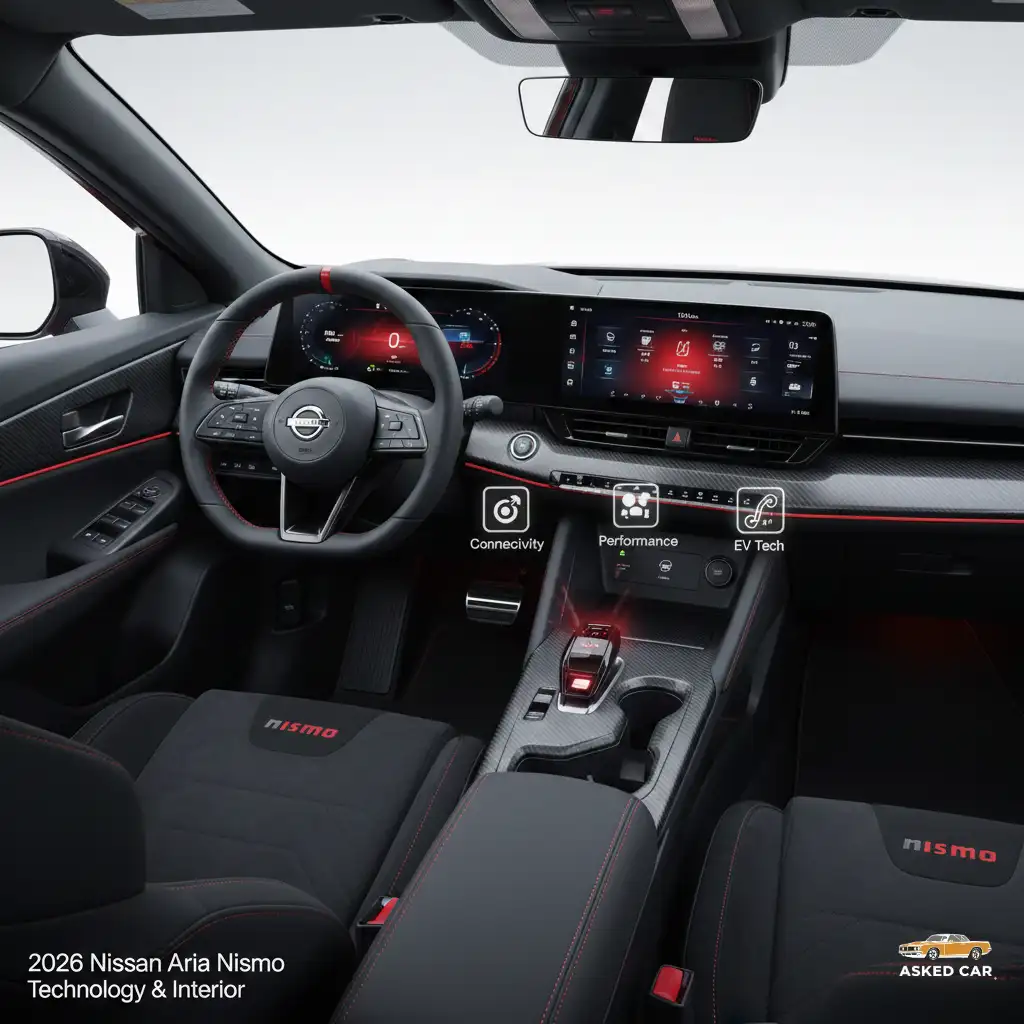
Step inside, and the Ariya Nismo attempts to justify its price tag. The cabin is bathed in black Alcantara (synthetic suede) with red stitching everywhere. The seats are deeper buckets that hold you well during cornering, and the red centering stripe on the steering wheel is a nice touch. The dual 12.3-inch screens are crisp, and the haptic wood-panel buttons on the dash still look concept-car cool, even if they are annoying to use while driving.
However, the tech feels a generation behind. The refresh rate on the screens isn’t as buttery smooth as a Tesla, and the menu system requires too many taps to do simple things. Apple CarPlay and Android Auto are standard, which saves the day. One major gripe: the “Nismo” mode changes the display graphics to a red theme, but it doesn’t give you the granular customization (battery preconditioning for track, drift modes, simulated gears) that competitors offer. It’s a skin, not a tool.
Design & Grades
Since this is a specialized trim, there aren’t “grades” of Nismo. You either get the Nismo, or you don’t. The design changes are functional—Nissan claims the spoilers and splitters improve airflow, but they are busy. The black cladding is glossy instead of matte, which scratches if you look at it wrong.
The “Stealth Grey” paint (exclusive to Nismo) looks fantastic in direct sunlight, but the red accents can feel a bit tacky, like something you’d buy at an auto parts store in 2005. It’s aggressive, but it lacks the cohesive, muscular stance of the Ioniq 5 N. It looks like an Ariya playing dress-up rather than a purpose-built machine.
Pricing (U.S. Examples)
If this car were to land in U.S. showrooms, pricing would likely be its Achilles’ heel.
Estimated MSRP: $60,000 – $65,000
At this price point, you are swimming with sharks. You can buy a Tesla Model Y Performance for significantly less (under $55k), which smokes the Ariya in a drag race. You are also approaching the Kia EV6 GT territory. Without federal tax credits (since the Ariya is built in Japan), it becomes a very hard financial pill to swallow.
Pros and Cons
The Good Stuff: The chassis tuning is surprisingly competent. Nissan’s engineers stiffened the springs and stabilizers, making the car corner flatter than any 4,800-lb crossover has a right to. The “zero gravity” seats remain comfortable even with the added bolstering, making this a performance car you can actually daily drive without needing a chiropractor. It’s also quiet; the sound insulation is top-tier.
The Bad Stuff: The charging speed is embarrassing. The Ariya Nismo peaks at 130 kW DC fast charging. In 2026, that is ancient. While a Hyundai charges from 10-80% in 18 minutes, the Ariya takes nearly 40. The brakes are also a letdown; despite the “Nismo” badge, there are no massive Brembo calipers here, just standard sliding calipers painted gold. Fade comes quickly if you actually drive it hard. And finally, it’s just not fast enough to wear the badge.
Is it Worth It?
If you live in Canada or Europe? Lease it, don’t buy it. It’s a unique, comfortable, and sporty-looking daily driver that will stand out in a parking lot of Teslas. But mechanically, it’s an appearance package with a tune.
For my U.S. readers? Don’t mourn its loss. If you want a fast electric crossover, buy the Hyundai Ioniq 5 N. It is faster, charges twice as fast, and offers a level of driver engagement (simulated gears, drift mode) that the Ariya Nismo can’t touch. Nissan built a nice GT cruiser here, but they didn’t build a Nismo.
Expert Guides/Opinion
Maintenance Tip: If you do manage to own one, watch those Michelin Pilot Sport EV tires. They are soft and expensive ($400+ each). With the instant torque of an EV, don’t expect them to last more than 20,000 miles. The “Must-Have” Accessory: Get a home Level 2 charger (11kW). You do not want to rely on public charging with this car’s slow 130kW max speed. It will turn a road trip into a waiting game.
Final Thoughts
The 2026 Nissan Ariya Nismo is a competent EV wearing a costume it hasn’t earned. It handles well and looks sharp, but without the charging speed or raw power to back up the badge, it feels like a relic before it even hits the dealership floor.