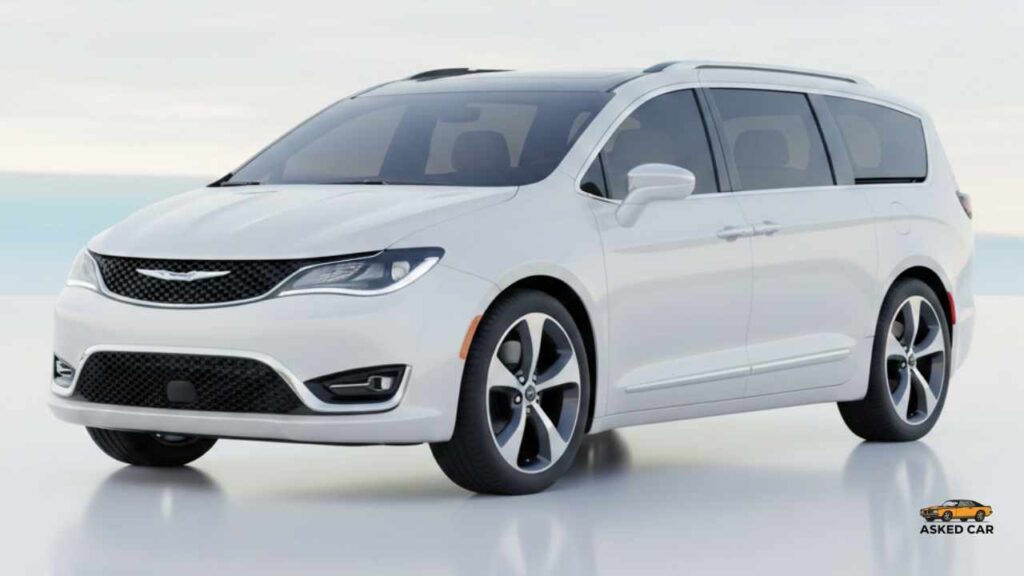
2026 Nissan Rogue vs. Toyota RAV4 Prime: The Comfort King vs. The Efficiency Monster
The battle for your driveway has never been this vicious. For years, the Toyota RAV4 Prime has been the golden child of the segment, fast, efficient, and impossible to find at MSRP. But for 2026, Nissan has finally brought a gun to the knife fight. The updated Nissan Rogue lineup, now headlined by a long-awaited Plug-in Hybrid (PHEV) and a rugged Rock Creek edition, is taking a direct swing at Toyota’s dominance.
I have spent decades tracking the evolution of these crossovers, and the choice between them is no longer just about reliability scores. It is a choice between two completely different philosophies. Do you want a sanctuary on wheels that coddles your back on a commute? Or do you want a drivetrain that punches like a sports car and sips fuel like a Prius? This comparison strips away the marketing fluff to tell you which one actually deserves your monthly payment.
Comparison: Key Features & Specs
On paper, these two look like twins, but in the real world, they feel worlds apart. The 2026 Toyota RAV4 Prime (likely dropping the “Prime” badge for just “PHEV” in the redesign) remains the pragmatic champion. It is expected to push its electric-only range toward the 50-mile mark, a crucial bump over the current generation. It sticks to a strictly two-row layout, maximizing cargo volume for camping gear and Costco runs.
The 2026 Nissan Rogue PHEV, however, pulls a magic trick: it offers a third row. By borrowing the platform from its corporate cousin, the Mitsubishi Outlander PHEV, the Rogue squeezes in two extra seats for small children. While those seats are useless for adults, they are a lifesaver for parents with sudden carpool duties. The Rogue also wins the “living room” war. Its “Zero Gravity” seats are, without hyperbole, the most comfortable chairs in the entire industry, vastly superior to the stiff, flat foam Toyota insists on using.
Powertrain & Performance
Here is where the personalities diverge sharply. The RAV4 Prime is violent. With over 300 horsepower on tap, it rips from 0-60 mph in under 6 seconds. The transition from electric to gas is seamless, but when that 2.5L engine wakes up, it sounds thrashy and loud—a distinct “agricultural” drone that Toyota hasn’t quite refined. But the efficiency is undeniable; once the battery is dead, the RAV4 still returns stellar hybrid MPG numbers in the high 30s.
The Nissan Rogue PHEV takes a different approach. Its 2.4-liter engine and dual-motor setup (borrowed from Mitsubishi) prioritize smoothness over speed. It delivers around 248 horsepower, which is adequate but won’t pin you to the seat like the Toyota. However, the Rogue’s “Super All-Wheel Control” AWD system feels more sophisticated in snow and corners, shifting torque with a precision the RAV4 lacks.
A warning on the Gas-Only Rogue: If you skip the hybrid and buy the standard Rogue with the 1.5L VC-Turbo engine, be aware of its history. While Nissan claims to have fixed the bearing failure issues that plagued earlier models, the 3-cylinder engine vibrates noticeably at idle and sounds like a blender under heavy load. The hybrid is the only powertrain I can wholeheartedly recommend.
Technology & Interior
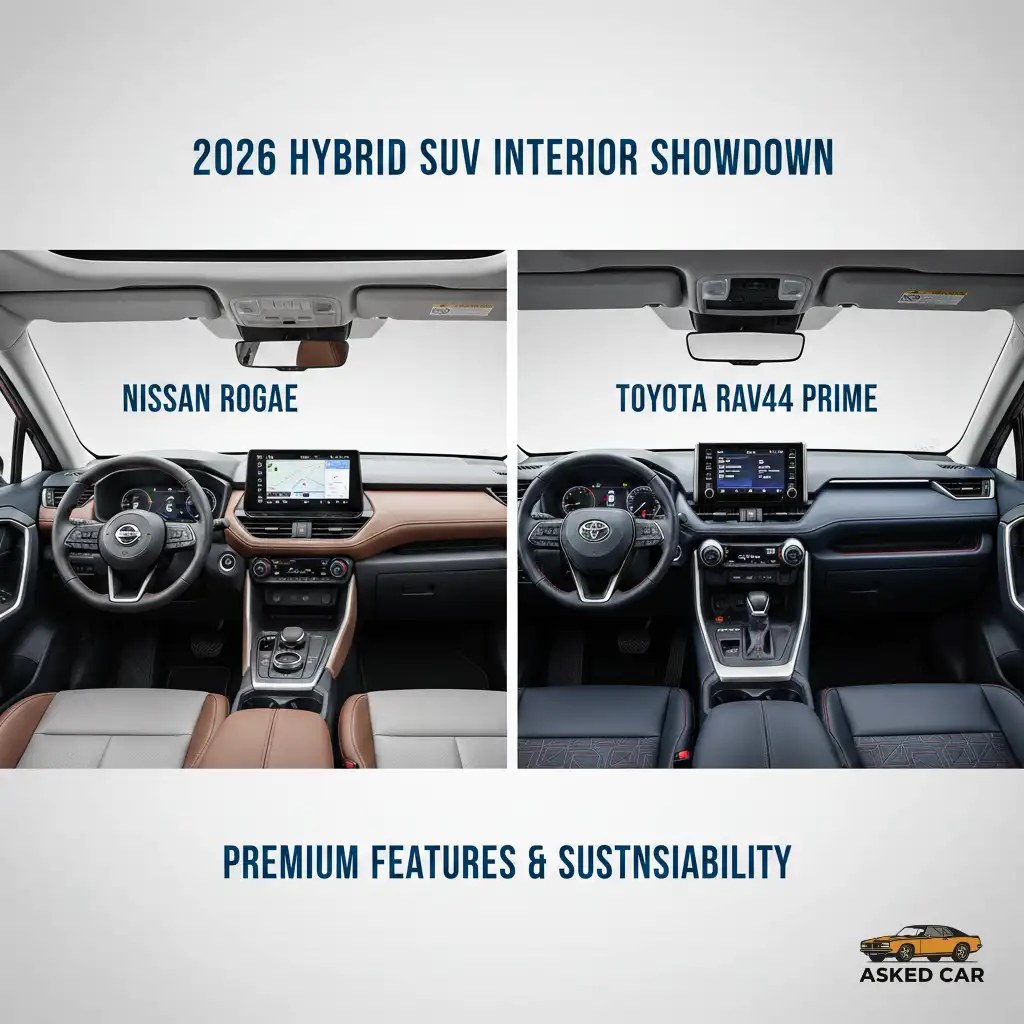
Sitting inside the Rogue feels like you went up a tax bracket. The fit and finish in the Platinum trim rivals entry-level luxury cars. You get quilted leather, a massive panoramic sunroof, and the new Google-built-in infotainment system. Having Google Maps natively on the screen without needing your phone is a game-changer for usability. It’s fast, crisp, and intuitive.
The RAV4, even with its “Arene” software update, still feels utility-focused. The screens are large (up to 12.9 inches), but the interface feels clunky compared to Google’s polish. The materials are durable—hard plastics that wipe clean—but they feel cheap. The cabin is also louder; Toyota has never mastered sound insulation the way Nissan has. At 70 mph, the Rogue is a library; the RAV4 is a wind tunnel.
Design & Grades
The 2026 Nissan Rogue Rock Creek edition is the looker of the bunch. With its tubular roof rack, Lava Red accents, and aggressive all-terrain tires, it captures that “weekend warrior” vibe perfectly. It also features an “Invisible Hood View” camera that helps you spot rocks directly under your front wheels—a legitimate off-road tool, not just a gimmick.
The RAV4 redesign leans into a boxier, “mini-Land Cruiser” aesthetic. The Woodland Edition and TRD Off-Road trims return, offering legitimate suspension upgrades that the Rogue Rock Creek lacks. If you actually plan to drive down fire roads, the Toyota’s clearance and approach angles are superior. The Rogue looks the part; the RAV4 acts the part.
Pricing (U.S. Examples)
Pricing is where the math gets tricky.
- 2026 Nissan Rogue: Starts around $30,000 for the gas model. The new PHEV will likely land in the $45,000 – $49,000 range, pushing it dangerously close to luxury territory.
- 2026 Toyota RAV4 Prime: Expect a starting MSRP near $46,000, climbing well over $50,000 for the fully loaded XSE with the Premium Package.
Dealers are historically more willing to discount the Rogue. You will likely pay sticker price (or a markup) for the RAV4 Prime due to high demand and lower supply.
Pros and Cons
The Good Stuff: The Nissan Rogue is the undisputed king of comfort. The ride quality is plush, the seats are heavenly, and the cabin is whisper-quiet. The addition of the PHEV option with a usable 38-mile electric range finally gives it the powertrain it deserves. The RAV4 Prime remains the efficiency champion, offering sports car acceleration with Prius-like fuel economy and Toyota’s legendary resale value.
The Bad Stuff The Rogue’s gas engine (the 1.5L Turbo) still carries the stigma of reliability concerns, and its handling is numb and uninspiring. It feels heavy in corners. The RAV4 Prime suffers from a distinct lack of refinement. The engine is loud, the interior feels plasticky for a $50,000 car, and the “Cablegate” issue (high-voltage cable corrosion) remains a worry for owners in the Rust Belt, despite Toyota’s design tweaks.
Is it Worth It?
If you want a car that feels expensive, comfortable, and high-tech for the daily school run, lease the Nissan Rogue PHEV. It offers a superior daily experience for the driver and passengers. The third row is a unique bonus you can’t get elsewhere in this class.
If you want a car to buy and keep for 10 years, buy the Toyota RAV4 Prime. Its powertrain is proven, its resale value is bulletproof, and its electric range is superior. Just be prepared to turn up the radio to drown out the road noise.
Expert Guides/Opinion
Maintenance Tip: If you buy the RAV4 Prime and live in a snowy state, spray the high-voltage cable connector under the rear bumper with an anti-corrosion inhibitor (like Fluid Film) once a year. It’s a $15 can that could save you a $4,000 repair bill. Buying Advice: Skip the base model Rogue. The “SV” trim with the Premium Package is the sweet spot for value. For the RAV4, the “SE” trim gives you the same powertrain as the expensive “XSE” for thousands less.
Final Thoughts
The 2026 Nissan Rogue is the better place to sit, but the 2026 Toyota RAV4 Prime is the better machine to own. Choose your priority: comfort or longevity.