Does an Electric Car Have a Gearbox? EV Transmission Explained
In my career, I’ve seen every type of drivetrain I could dream of, from the roar of a V8 to the whisper of a tiny electric motor. One question that keeps popping up in both conversation and in the shop is whether an electric car actually uses a gearbox. The answer isn’t as simple as a yes or no; it depends on what you mean by “gearbox,” how manufacturers design their powertrains, and what performance or economy goals they’re chasing.
The One-Gear Wonder: How It Works
In an internal combustion engine (ICE), the power band is narrow. A gas engine might only make peak power between 3,000 and 5,000 RPM. To keep the engine in that “sweet spot” while you go from 0 to 80 mph, you need multiple gears (6, 8, or even 10 these days) to change the ratio.
Electric motors are different. They produce 100% of their torque the instant they start spinning, from 0 RPM all the way up to 15,000 or 20,000 RPM. Because the power delivery is so linear and massive, they don’t need to shift gears to stay in a power band.
However, an electric motor spins way too fast to connect directly to your wheels. If you did that, your tires would spin at 10,000 RPM doing 40 mph, and you’d have zero torque to get moving. This is where the reduction gear comes in. It steps down the motor’s high RPM to a lower, usable speed for the wheels, while simultaneously multiplying the torque. It’s usually a simple setup: a small gear on the motor shaft spins a larger gear, which spins the differential. That’s it. No valve bodies, no clutch packs, no torque converters. Just pure, direct mechanical reduction.
The Exception: The Two-Speed Taycan
I have to mention the outlier because there’s always one. The Porsche Taycan and its cousin, the Audi e-tron GT, use a two-speed gearbox on the rear axle. Why? Because Porsche wanted violent acceleration and a high top speed (Autobahn rules).
In these cars, “First Gear” is a short reduction ratio that provides sledgehammer acceleration off the line. Then, around 50-60 mph, you’ll feel a distinct mechanical thunk—that’s the car shifting into “Second Gear,” which is a taller ratio designed for high-speed efficiency. It’s a brilliant piece of engineering, but for 99% of EV drivers (Tesla, Bolt, Leaf, Hyundai), you are living the single-speed life.
The Direct‑Drive Reality
Most modern electric vehicles, including the Tesla Model S, Nissan Leaf, and Chevy Bolt, use a direct‑drive setup. The electric motor’s shaft connects directly to the axle via a single gear. There’s no gearbox, no clutch, no synchronizers, and no gearbox control software. Instead, the motor’s torque curve is so flat that it can produce powerful acceleration at very low speeds—sometimes even at zero rpm.
You’ll hear the characteristic whine of an electric motor as it spins up, but there’s no clicking and clacking of gears shifting past. The smoothness is partly thanks to the motor’s variable torque and the lack of gear changes that would otherwise interrupt power delivery. If you’re wondering about feeling the change “in your seat,” you won’t sense a click; you’ll experience a linear surge of power that might even feel like a gentle thrust under heavy acceleration.
The battery’s power is managed by the inverter, which uses sophisticated algorithms to convert the DC from the battery into the AC needed to spin the motor. In this configuration, the motor’s internal design takes care of the speed‑torque relationship that a gearbox would normally handle. This is why many manufacturers claim “one‑speed” performance.
When Gearboxes Still Appear in the EV World
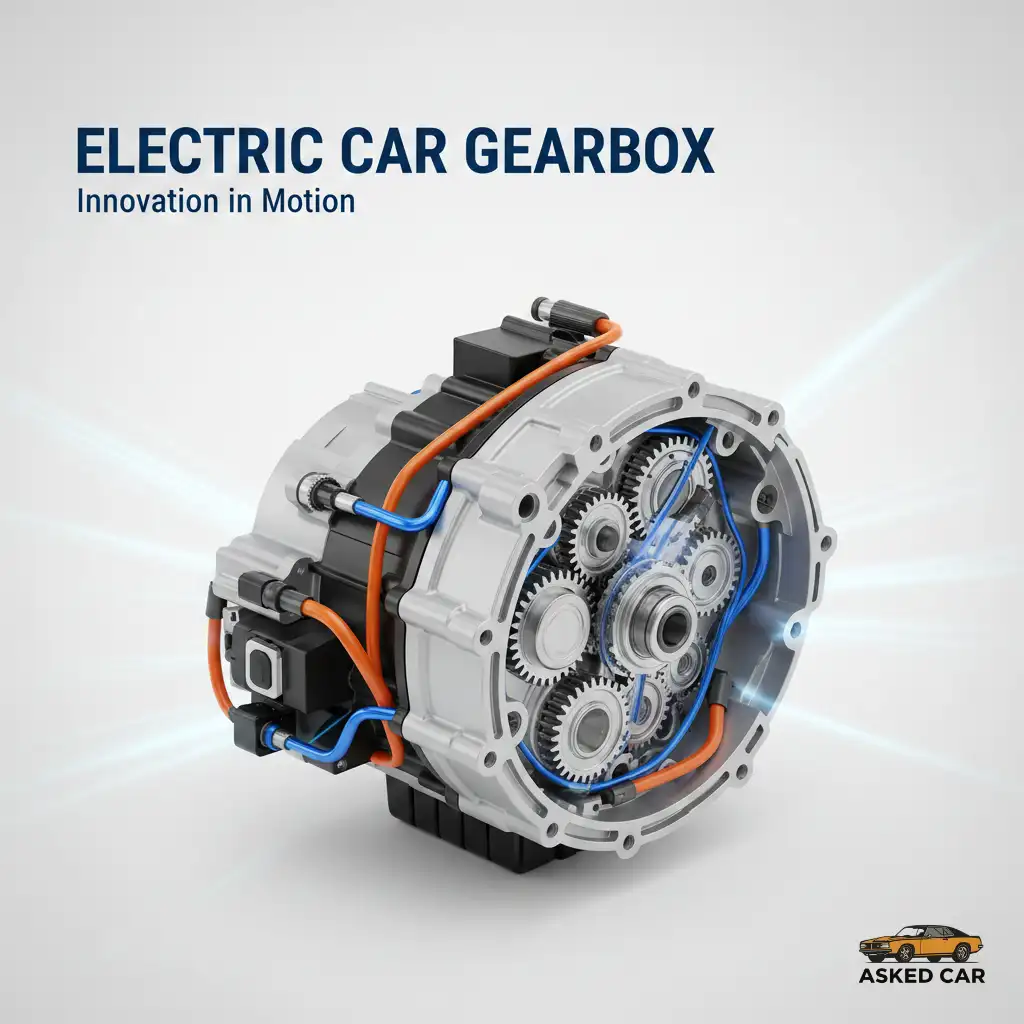
Not all electric cars drop the gearbox entirely. Audi’s e-tron and the Porsche Taycan, for instance, employ two‑speed transmissions. Audi’s system has a “low” gear that offers a higher differential gear ratio for rapid acceleration, and a “high” gear that improves top‑speed efficiency. Porsche, on the other hand, uses a dual‑speed gearbox to achieve a near‑optimal balance between sprinting performance and energy consumption at high speeds. Think of it as a “gearbox on a need basis,” rather than a mechanical necessity.
These transmissions are small, lightweight, and controlled like high‑end race gearboxes. They allow the engine to stay within its optimal power band in both modes. When you see a manual in a driver’s manual talking about “gear ratios of 2.5:1 & 1.0:1,” that’s the key to how the car can push past 200 mph or give a street‑legal drive with great efficiency.
Regenerative Braking as the “Hidden Gear”
Even in a single‑speed electric car, the drivetrain can experience effective gearing under the hood thanks to regenerative braking. When you let off the accelerator, the motor’s inverter works in reverse, turning motor motion into electrical current that charges the battery. The torque produced can create a natural “braking torque” even at low speeds. The result is a smooth deceleration that feels less like engine braking and more like a gentle hand holding the car down—an electric “gear” if you will.
What My Tech Guides Usually Tell You
When I give a workshop lesson, I explain how an electric motor’s torque can go up to 300% of its peak output at low rpm, something unattainable by a combustion engine. We use that fact to showcase why a gearbox is unnecessary for most light-to-medium-weight EVs. If the car is heavy—like a fully loaded SUV—the designer may need a gearbox to keep the motor from spinning too fast and out of its efficient range.
The torque multiplication you get from a gearbox is not needed for the majority of driving scenarios. You’ll notice that your car can accelerate from 0 to 60 mph in about 5–7 seconds without any gear changes, and the driver experience is almost seamless. The motor’s electronic controls, combined with the battery’s power management, keep the car within its optimal power envelope.
The Bottom Line
So does an electric car have a gearbox? In the traditional sense, most don’t. A majority of contemporary EVs run on a single‑speed direct‑drive system, leveraging the electric motor’s broad torque curve. A few models do feature small, efficient gearboxes—often two‑speed setups—that allow better high‑speed efficiency or punchy acceleration. From a mechanical standpoint, that means fewer worn parts, fewer moving components, and fewer things that need tuning or lubrication.
When you feel that distinct smoothness, that whisper of power, or the gentle, steady hum of the motor, you know the car’s design is optimized for electric performance. And if you ever drive into a dusty parking lot or a showroom and hear a gentle click, that’s your mechanic’s cue that this electric car might have a “hidden” gearbox tailored for high performance.
In my 20 years of building and documenting automotive mechanics, I’ve seen hybrids keep their gearboxes while full‑EVs streamline away from them. By staying informed about how these systems work, you can appreciate the incredible engineering that lets a sleek electric ride feel both futuristic and rooted in solid mechanical principles.